
 My Chart Patient Portal
 Language Services
 Medical Records
 News & Articles
 Charitable Giving
 Programs & Classes
September 14, 2026
Allergies, Cold, or Flu? How to Tell the Difference This Fall
A Simple Guide to Fall Allergy, Cold, and Flu Symptoms
By Shawn Wallace, MD, Southern New Hampshire Health Amherst Family Practice
A stuffy nose. A scratchy throat. Sneezing, coughing, and feeling tired. These symptoms are common in the fall, but what is causing them?
Fall allergies, colds, and the flu can all make you feel pretty miserable, and it is not always easy to tell which one you have. At Southern New Hampshire Health’s Amherst Family Practice, I often see patients who are not sure what is behind their symptoms. A few simple tips can help you figure out what may be going on, what you can do at home, and when it is time to see a healthcare provider.
Is It Fall Allergies?
Fall allergies are often triggered by ragweed pollen and mold present in the air. Unlike a cold or the flu, allergies are not caused by a virus and are not contagious.
Common fall allergy symptoms include:
- Sneezing
- Runny or stuffy nose
- Itchy or watery eyes
- Itchy nose or throat
- Postnasal drip
- Mild cough
One of the biggest clues you’re facing allergies is itching. Itchy eyes, nose, or throat are much more common with allergies than with a cold or flu.
Allergy symptoms can also last for weeks and may get better or worse depending on pollen levels or your surroundings. Despite what you may have heard, allergies do not cause a fever.
Treating Fall Allergies at Home
While this may be difficult during the fall season, try limiting your exposure to pollen and other triggers. Keep windows closed when pollen counts are high, typically from August through October. Shower after spending time outdoors, and change clothes when you come inside.
Over-the-counter antihistamines, saline nasal rinses, and some nasal sprays may also help. When experiencing these symptoms, speak with your healthcare provider or pharmacist about which option is right for you.
Is It a Cold? 
Colds are caused by viruses, often caught through respiratory droplets or contaminated surfaces. When an infected person coughs, sneezes, talks, or even breathes, they release virus-filled droplets into the air. If you are within close range (about 3–6 feet), these droplets can land on your mouth, nose, or eyes, allowing the virus to enter your body. Colds usually come on gradually and tend to be milder than the flu.
Common cold symptoms include:
- Runny or stuffy nose
- Sneezing
- Sore throat
- Cough
- Mild tiredness
- Mild body aches
A fever is uncommon in adults with a cold.
Treating Colds at Home
Most colds improve on their own. Typically, I recommend lots of rest, plenty of fluids, and then consider over-the-counter medicine for pain, fever, or congestion when appropriate. Evidence for over-the-counter cold medications is limited and inconsistent.
Symptom targeted options:
- Nasal congestion- Pseudoephedrine or topical intranasal oxymetazoline (limit topical decongestants to no more than three days to avoid rebound rhinitis).
- Cough- Dextromethorphan or honey
- Fever/aches- Acetaminophen or NSAIDs (Ibuprofen is more effective than acetaminophen for fever-related discomfort)
Children younger than 4 years old should avoid over-the-counter cold medications due to lack of benefit and potential risk of harm.
Older adults should avoid first-generation antihistamines (diphenhydramine) and oral decongestants due to increased risk.
Non-medication approaches:
- Nasal saline irrigation
- Humidified air and adequate hydration
- Hand hygiene for prevention
Is It the Flu?
Flu symptoms often appear quickly and are usually more intense than cold symptoms.
Common flu symptoms include:
- Fever or chills
- Cough
- Sore throat
- Headache
- Muscle or body aches
- Tiredness or weakness
- Runny or stuffy nose
Think about how you feel overall. A cold may leave you uncomfortable. The flu is more likely to make you feel sick all over, with significant fatigue, aches, or chills.
Some people with the flu do not have a fever, so symptoms alone cannot always tell you for sure what illness you have.
Allergies vs. Cold vs. Flu: A Quick Symptom Check
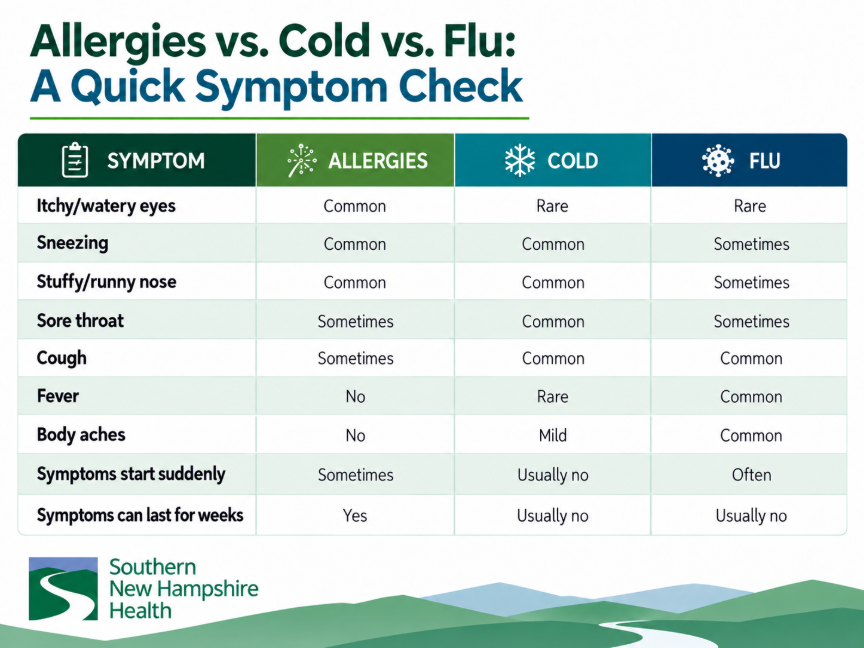
Keep in mind that COVID-19 and other respiratory illnesses can cause many of these symptoms. Testing may sometimes be the best way to know what is making you sick, and there are many over-the-counter test kits available at your local pharmacy.
When Should You See a Healthcare Provider?
For mild symptoms, home care may be all you need. However, talk with a healthcare provider to see if your symptoms are severe or don’t improve over time.
Seek medical attention right away for symptoms such as:
- Trouble breathing or shortness of breath
- Chest pain or pressure
- Severe weakness, dizziness, or confusion
- Signs of dehydration
- Symptoms that improve and then suddenly become worse
People who are at higher risk for complications from the flu should always contact their healthcare provider early if flu symptoms develop. Flu treatment works best when started early, ideally within 48 hours of the start of symptoms.
When you are not sure what is causing your symptoms, a healthcare provider can help you get the right diagnosis and treatment.
If you are looking for a primary care provider, Southern New Hampshire HealthMatch can help connect you with a provider who meets your needs. Call 603-880-EASY (3279) to get started.
Southern New Hampshire Health is a nonprofit health system offering primary, specialty, and walk-in urgent care to help patients throughout the region stay healthy and get the right care when they need it during the flu season.

Dr. Shawn Wallace is a board-certified family physician at Amherst Family Practice in Amherst, New Hampshire. Dr. Wallace enjoys the variety that family medicine offers, from diagnosing and treating to helping patients of all ages prevent illness before it starts.