
 My Chart Patient Portal
 Language Services
 Medical Records
 News & Articles
 Charitable Giving
 Programs & Classes
March 17, 2026
How Much Protein You Really Need at Every Age
By Wendy Diphillipo, Registered Dietitian, Southern New Hampshire Weight Management
Protein is a hot topic right now. It is in shakes, bars, cereals, and even coffee. Social media is full of advice about eating more protein to build and protect muscle, lose weight, and “age well.”
So why is protein such a hot topic?
As we get older, we naturally lose muscle. This can start as early as our 30s. Less muscle can mean lower strength, slower metabolism, and a higher risk of falls later in life.
As a nonprofit health system, we at Southern New Hampshire Health believe in sharing clear, science-based guidance. National Nutrition Month is a great time to look at how much protein you really need to consume and how that changes over time.
Why do you need protein?
Protein helps build and repair muscles, skin, organs, and bones. Research shows that greater muscle mass helps bones adapt to added weight and stay stronger, even after menopause. It also supports your immune system and helps your body heal after injury or illness.
The Recommended Dietary Allowance (RDA) for adults is about 0.36 grams of protein per pound of body weight per day, according to the National Academies of Medicine. For a 150-pound adult, that equals about 54 grams per day. This amount prevents deficiency, but some people may benefit from slightly more, especially as they age.
Adequate protein intake helps prevent sarcopenia, the age-related loss of muscle mass and strength that can begin as early as 30 and accelerate in our 60s, increasing the risk of frailty, falls, and fractures. Getting enough protein early on helps protect muscle as we age.
Use this protein calculator to determine how much you need each day.
How to get enough protein without overdoing it
Before you add more protein to your plate, think about where that protein is coming from. “Eat more protein” does not have to mean “eat more meat.” While foods like beef, chicken, pork, milk, cheese, and eggs are rich in protein, they are not the only options. Plant foods such as beans, lentils, nuts, seeds, whole grains and even some vegetables also provide meaningful amounts of protein.
It also helps to look at the full nutrition picture. Some protein sources are higher in saturated fat or added sugars, while others provide fiber, healthy fats, vitamins, and minerals. Choose options that are lower in saturated fat and highly processed ingredients, and richer in nutrients that support overall health.
You do not need protein powder to meet your needs. Most people can get enough from food. Great sources of protein include:
-
One egg has about 6 grams.
-
A cup of Greek yogurt has about 15 to 20 grams.
-
Three ounces of chicken has about 21 grams.
-
Half a cup of beans has about 7 to 8 grams.
-
¼ cup of nuts has about 7 grams.
Try to include a protein source at each meal and snack. Women should aim for 25-30g of protein per meal, and men should aim for 30g of protein per meal, with 1-2 high-protein snacks in between.
Protein Needs by Age
Here are general daily protein recommendations based on guidance from the National Academies of Medicine and the U.S. Department of Agriculture.
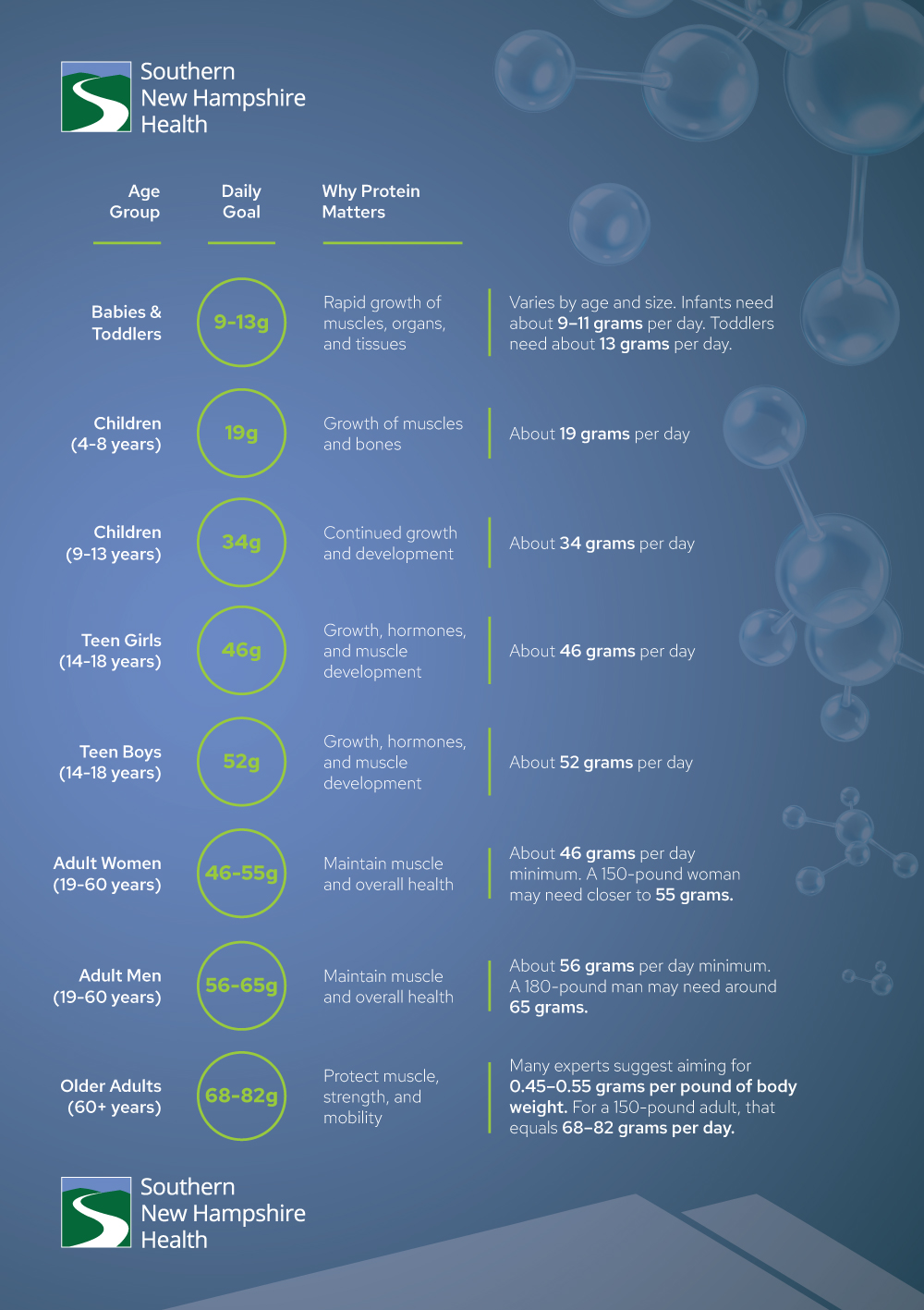
How Much Protein Do You Need?
Very active people or those recovering from illness may need additional protein.
Always speak with your healthcare provider if you have kidney disease or other medical conditions.
Do perimenopausal women need more protein?
I commonly hear from my perimenopausal patients, “I saw on (TikTok or Instagram) that I should be eating XXX amount of protein. Is that true? It seems like a lot!”
Perimenopause is the time leading up to menopause, often starting in a woman’s 40s. During this stage, estrogen levels change. These changes can affect muscle mass, body fat, bone health, and metabolism.
Research shows that women can lose muscle during midlife, especially if they are not doing strength training. Because of this, many experts suggest that women in perimenopause and menopause may benefit from slightly higher protein intake than the basic minimum, especially if their goal is to maintain muscle and strength.
So, how much protein do perimenopausal women need? Instead of only meeting the minimum of 46 grams per day, aim for about 20 to 30 grams of protein per meal. Pairing protein with strength exercises, like resistance bands or light weights, is especially helpful for protecting muscle.
The bottom line on protein
Protein is a hot topic for a reason. It supports muscle, strength, and healthy aging. But more is not always better. The goal is the right amount for your age, body, and health needs.
If you are unsure how much protein is right for you, a registered dietitian can help you create a plan that fits your lifestyle and your goals.
During National Nutrition Month, take a moment to look at your plate. Are you getting enough protein to support your health at this stage of life?
 Wendy Diphillipo is a registered dietitian with experience in long-term care, inpatient, and outpatient care. She earned her master's degree from Framingham State University and completed a year- long dietetic internship at Hebrew Senior Life Rehabilitation Center in Boston, MA. She is in practice at Southern New Hampshire Weight Management.