
 My Chart Patient Portal
 Language Services
 Medical Records
 News & Articles
 Charitable Giving
 Programs & Classes
July 9, 2026
Joint Decisions: Understanding Arthritis, Treatment Options, and Life After Joint Replacement
Arthritis can be painful, frustrating, and life-altering, but there are more treatment options than many people realize. In this episode of On Call with Southern New Hampshire Health, we talk with Dr. Andy Padmanabha, an orthopedic surgeon at Foundation Orthopedics and director of arthroplasty at Southern New Hampshire Health, about how arthritis affects the body, when to seek care, and what patients can expect from treatment.
Dr. Padmanabha discusses ways to slow the progression of arthritis, including low-impact exercise, physical therapy, weight management, injections, and activity modification. He also explains when joint replacement may be the right next step, how same-day total joint procedures are helping patients recover at home, and how robotic-assisted technology is supporting more personalized surgical care.
Whether you are managing joint pain, exploring treatment options, or wondering what life after a hip or knee replacement could look like, this episode offers helpful insight into getting back to the activities you love.
Learn about Foundation Orthopedics
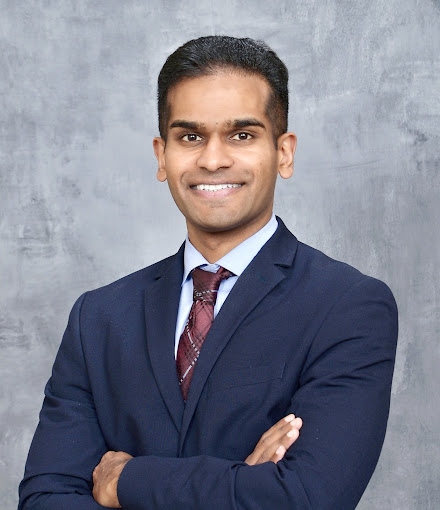 About Anand (Andy) Padmanabha, MD
Dr. Anand Padmanabha is a Harvard fellowship-trained orthopedic surgeon specializing in hip and knee replacement surgery. Anand graduated summa cum laude from the Pennsylvania State University with a major in Biological Sciences. During his time there, he was awarded the President’s Freshman Award for his academic achievements and was ultimately elected to the prestigious Phi Beta Kappa honor society during his senior year. He subsequently matriculated into medical school at the University of Texas, where he graduated magna cum laude and was elected to the Alpha Omega Alpha honor society for his dedication to research, education, and academic excellence. He was also inducted into the Gold Humanism Honor Society for his altruistic and compassionate demeanor during his time there.
Anand subsequently completed his orthopedic training at the Boston University Medical Center and completed a fellowship in joint replacement surgery at the Harvard Adult Reconstruction program at Massachusetts General Hospital in Boston, MA.
Anand has authored numerous peer-reviewed publications and has trained with numerous renowned orthopaedic surgeons in his field. Most recently, Dr. Padmanabha is responsible for starting the outpatient joint replacement program at Southern New Hampshire Medical Center. If you are interested in being safely discharged home the same day after your joint replacement surgery, please contact Foundation Orthopedics for more information.
Complete Transcript:
Host (Keith Baldi): On Call with Southern New Hampshire Health. I'm your host, Keith Baldi. On Call delivers the latest health care news and updates, along with insights into the latest medical innovations and technologies. Southern New Hampshire Health is a nonprofit system serving the communities in greater Nashua, New Hampshire, and northern Massachusetts. The health system includes a 188-bed hospital, one of southern New Hampshire's most comprehensive teams of primary and specialty care providers, and five walk-in immediate care locations open seven days a week for urgent needs.
Southern New Hampshire Health. Expert care. Close to home. Thanks for joining us for today's episode of On Call. We're discussing something that many people deal with, and sometimes it can be truly life-altering. That's arthritis. Joining us to talk about this is Dr. Andy Padmanabha, an orthopedic surgeon at Foundation Orthopedics. Dr. Padmanabha, thanks for being here.
Dr. Padmanabha: Thank you for having me on your podcast, Keith.
Host (Keith Baldi): Absolutely. So, you're the director of arthroplasty here at Southern New Hampshire Health. It's a procedure to replace joints. Is that correct?
Dr. Padmanabha: Yeah, that's correct. So, when we talk about arthroplasty, we're talking about replacing joints. It could be hip, knee, shoulder, or elbow. Most commonly, it's hip or knee. You know, it affects many patients every year. Typically, it affects patients above the age of 50, but it can affect patients of all ages.
Host (Keith Baldi): Interesting. So, tell us a little bit about how you got into medicine, but then this specialty because it's an interesting one.
Dr. Padmanabha: Yeah. You know, orthopedic surgery has always fascinated me in terms of the operative aspect and the clinical aspect. Personally, I tore my Achilles tendon when I was in high school, and that's when I got exposed to orthopedics. I started training with an orthopedic surgeon, the same one who actually performed my surgery. From then on, I just knew that I wanted to do orthopedics, and joint replacement specifically. When I got exposed to that in residency, I realized that you can make a huge difference in a patient's life. That's when it just all made sense for me.
Host (Keith Baldi): Yeah, that's interesting. It's interesting that you trained with the person who gave you surgery on your Achilles. How did that come about?
Dr. Padmanabha: Yeah. I mean, that procedure was such a life-changing procedure for me. It was my first major injury, and it happened during a competitive tennis match. It was actually a tennis championship in high school. I just wanted to be able to get back on my feet, get back to competitive play, and just seeing what he did and the kind of recovery that I had, working with the physical therapist, really got me exposed to not only just the operative aspect, but the recovery aspect and the clinical aspect.
From then on, I knew I wanted to do orthopedics. I went into medical school, tried to expose myself as broadly as I could, and I just realized that surgery was for me. Being in the OR, being able to use my hands to the benefit of patients, and being able to make a direct impact on their mobility and their function was just something that was life-changing for me.
Host (Keith Baldi): That's fantastic. It's always interesting to hear people's stories, whatever their career is. But, you know, specifically in medicine, a lot of times doctors tell me that it's because of that one exposure to somebody or a circumstance in their life.
Dr. Padmanabha: Yeah, absolutely. It's always just one or two people who can flip that switch for you.
Host (Keith Baldi): That's fantastic. So, you're part of the team at Foundation Orthopedics. Talk a little bit about how the program you work on has developed, and sort of a comprehensive approach there.
Dr. Padmanabha: Sure. Yeah. So, Foundation Orthopedics, you know, we have six surgeons currently, and it's grown in the past six years since I've been here. From my standpoint, I can speak specifically to the arthroplasty subsection of the department, which I think has grown fantastically since I've been here. I joined the practice in 2020. At that time, we didn't necessarily have a formal joint program.
Dr. Padmanabha: We had hip and knee surgeons who had come sort of intermittently through the program, and my goal was to help build a program so that we could continue to grow the practice. In 2020, we started doing same-day total joints at the hospital, which we previously weren't doing at Southern New Hampshire Medical Center. Then, you know, other surgeons started to do that as well, and it started to grow. Since we've been doing the same-day total joints program, we've done over 700 same-day total joints from Foundation Orthopedics.
Host (Keith Baldi): You know, same day. That's changed a lot. I mean, the thought of having to be in the hospital for a really long time, I'm sure, back when people had major surgeries on joints, or...
Dr. Padmanabha: Right. You know, during that time in 2020, obviously, with the pandemic, that was a big driver to get patients home and out of the hospital, and that was a big part of it. The other thing is just the landscape of how total joints has changed in the past 10 or 20 years. It's a more minimally invasive procedure. The pain control regimens have rapidly evolved to be more successful, and patients are typically getting up and moving around in the recovery room. They want to go home. They want to recover with their families. So, that's been a big part of the program since then.
Host (Keith Baldi): Well, and now just talking about that, Southern New Hampshire Health has an ambulatory surgical center, ASC. For the average person, it's basically a place to get surgery, just like an OR in a hospital. It's connected to the hospital with a catwalk here, right? But it offers all of the same...
Host (Keith Baldi): But you can usually, you know, it's meant that you leave the same day.
Dr. Padmanabha: Right, right, right. The ambulatory surgical center here is fantastic. You know, we recently became accredited by the DNV, last year. The facility is fantastic. It's a great patient experience, and our goal is to try to utilize ASC in the future. Moving total joint replacements to the ASCs is a new project that we've been working on. I'm very excited to be on the committee for that. I think it's really going to center around the same conversations we had six years ago when we were starting the same-day total joints program at the hospital, which is rapid-acting anesthesia, enhanced recovery protocols for a rapid recovery here in the hospital or at the ASC, and getting patients safely home. That's our goal.
Host (Keith Baldi): That's amazing. It really is. I know, for people who have used that center, they've had great things to say. I've been over there a number of times. It's comfortable. It's convenient. It's easy to get in and out of. The doctors there have this amazing expertise. The nurses, it's, you know, so it's definitely something that people should know about if they have to, you know...
Dr. Padmanabha: Absolutely. This really comes down to patient experience, and we want their experience to be a personalized experience. In the ASC, it just feels that way, a lot more personalized and a lot more, I guess, a little bit taken away from the rush from the hospital, so to speak.
Host (Keith Baldi): So, no, that's important. Yeah. So, I think just about everybody listening has heard about arthritis, right? I mean, that's something that you hear a lot of people, though, you know, there's a connotation that comes with it, that it's a condition experienced by older patients. Right? You get older, you'll get arthritis. People think about it in their hands and feet, maybe knees, but there's a lot more to it.
Dr. Padmanabha: Yeah. You know, arthritis is a term that's thrown out there a lot, right? Arthritis comes in various shapes and forms. There's what we call primary arthritis. It could be osteoarthritis, right, primary osteoarthritis, or secondary osteoarthritis from other causes, such as a previous history of trauma. Or it could be dysplasia if the joint wasn't formed correctly. Then there's inflammatory arthritis, which is a whole different subcategory in which the joint becomes destroyed over time because of inflammation.
It could be rheumatoid arthritis. It could be psoriatic arthritis, but the end result is often similar among all three types. The joint starts to become deteriorated, the cartilage wears away, the bones come closer and closer to one another, and the capsule and the soft tissues around the joint become inflamed and angry. The symptoms are typically stiffness, pain with ambulation, and pain with usage of the joint.
Typically, you might have stiffness that's worse in the beginning of the day than at the end of the day, but the pain is worse at the end of the day because you've been walking on it all day. You might have some swelling. Those are the things that patients with arthritis, especially in the hip and knee, will start to feel.
Host (Keith Baldi): Makes sense. You know, it can really affect people's quality of life, right? Like you're saying, I mean, it's stiff in the morning when you get up and painful in the evening. That doesn't sound fun, right? Is there a way to prevent or at least slow down the progression?
Dr. Padmanabha: That's a good question, and I get that a lot from patients. I typically tell patients that arthritis, at least osteoarthritis, is dependent on multiple factors. Environment, hereditary, and genetics do play a role, but environment is probably an even bigger role. That's what we've seen in the literature. Impact on the joint is really what's going to determine how rapidly that joint is going to deteriorate.
So, I typically tell patients if they can, avoid impact activity. Walking on an asphalt surface for two miles is probably not as good as going on a stationary bike and riding for two miles, right, or even on a mountain bike and actually going for two miles. So, I typically tell patients to try to engage in activities like swimming, which is good for your joints. A stationary bike is also good. Another option would be an elliptical, and trying to avoid high-impact activities.
The other thing is your joint mechanics, optimizing your joint mechanics. Physical therapy can help prevent the progression of arthritis. It's been shown to help with hip arthritis more so than arthritis in the guidelines. But those are all things I will tell patients that help prevent further progression. Although once again, it's really about preventing rapid deterioration. You really can't prevent progression, period.
Host (Keith Baldi): Right, right. Okay. So, if you see a patient who is coming in with these symptoms, they talk it over with you to try to slow it down. Yeah, that makes sense.
Dr. Padmanabha: Exactly.
Host (Keith Baldi): Yeah. So, someone is diagnosed with arthritis. Maybe they come to see you. Maybe they've been going to their PCP, and they're concerned about it. What are some of the treatments that they can, and you touched on this just a second ago, but what are some of the treatments they can kind of do? So, do you send people right away to therapy, or what are you...
Dr. Padmanabha: Yeah. You know, that's a good question. So, there are various treatments for arthritis, and it really depends on two things: how severe the arthritis looks on the X-rays and how the patient feels. Ultimately, we want to treat the patient, not necessarily just the X-ray. I have patients who have come in with moderate arthritis, but their pain is literally a one to two out of 10, 10 being the worst. It's really not that severe.
So, those patients I will typically offer physical therapy for. Injections are a good option. There are different types of injections that we'll go into a little bit later. Then, you know, pain management. There are topical gels that they can use on their knees or just activity modification. If they come in with more severe pain, injections are still an option, which are temporary typically, and then surgical options, obviously, are on the table as well.
When we talk about the injections for knee arthritis specifically, there are different types of injections, right? Primarily, pain-modulating injections, which come in the form of viscosupplementation injections, quote-unquote gel injections, versus steroid lidocaine injections, which are sort of anti-inflammatory, pain-relieving medications. Then, the other whole new type of area that we've been looking at recently is called orthobiologics regenerative therapy. That could be platelet-rich plasma injections or even stem cell injections. So, those are options that we actually offer, including PRP injections, within the Foundation network, Foundation Medical Partners, and Southern New Hampshire Health, including the gel injection and the steroid injections. That's something that we offer to our patients currently as well.
Host (Keith Baldi): That's interesting. Now, how long would something like that last?
Dr. Padmanabha: Yeah. Usually, they last a few months on average. That's not to say that you couldn't be lucky and get years' worth of relief out of these injections, but typically around three to six months.
Host (Keith Baldi): Okay. So, someone comes to you, and you could work on a plan. They come back, and they get an injection. A few months later, they may have to come back. They get an update and maybe another injection or whatever, and kind of see where it goes from there.
Dr. Padmanabha: Exactly. It really depends on what's going on in their life. If they have something big planned, then probably they don't want to undergo surgery, a knee replacement, or hip replacement. So, we really try to cater around what the patient is trying to do with their lives and try to treat their symptoms as best we can.
Host (Keith Baldi): Well, that makes sense. Like a lot of the things we talk about on this podcast, and you're going through them, the progression, you see that you see a provider, then you see a specialist, you get treatments, and it comes down to sometimes needing surgery. So, when would that... So, if the injections or something like that, or some therapy, doesn't work, and you've looked at X-rays, all that kind of imaging, maybe it's time for surgery. So, what is the next step there?
Dr. Padmanabha: Yeah. You know, I typically have a conversation with a patient, and I say, look, this is a progressive problem. It's going to continue to get worse. The younger you are, the better you are at recovering from a procedure like this. If we were to wait until it gets a little worse, then it might be a more difficult surgery.
You might start to see more bone loss, especially with the hips if we wait too long. Sometimes the structure of the socket or the ball might change over time, and you want to get to that surgery a little bit sooner. So, that's the conversation that I will have to sort of set expectations with the patient. I'm like, you know, you're probably looking at this procedure within the next year. You might want to have that in the back of your mind. It's going to help improve your quality of life. Typically, hip and knee replacements have high success rates. It's over 90%, and once you're fully recovered, you're going to feel a lot better than what you're feeling now.
Host (Keith Baldi): You know, and I mean, so much that we've learned over the decades, diet makes a big deal in people's lives, but exercise makes a big deal in people's lives. Not only is it good for your health, but it's good for your mental well-being. It's good for socialization, all those things, right? So, when you think, well, sure, somebody needs a knee or hip replacement, some people probably think like, I'll just power through it. But then, when you can't do the things that you love, that makes it kind of hard.
Dr. Padmanabha: Yeah. You know, it's a catch-22, right? A lot of times, arthritis can be due to an overload problem. So, it could be due to an elevated body mass index. Then, to have a successful outcome after the surgery, you have to lose the weight. But it's tough to exercise once you have arthritis. That's another conversation I typically have with patients. I didn't touch on it before, but weight loss is one of the primary things for preventing progression of the arthritis, in addition to avoiding those joint impact activities.
Host (Keith Baldi): That's great. Well, I know that at Southern New Hampshire Health, we're fortunate that you have the providers. The doctors, PCPs, are the first line of contact, and then, you know, the specialists, but then you can work with the weight management center, their nutritionists. There are a lot of people who can, I mean, because really it comes down to an overall approach to it.
Dr. Padmanabha: Right, right. Absolutely.
Host (Keith Baldi): So, I have a couple of friends who recently, they're my age, got hip replacements. We were talking about it, and I was thinking, man, this sounds difficult, and it's a major surgery, right? But they recovered well and pretty fast, and they were back doing the things that they loved. One of the guys is on my softball team, and I was like, wow, you did well. So, how do you put people's minds at ease? Because a success rate of over 90% is pretty darn good.
Dr. Padmanabha: Yeah. You know, especially with hip replacements, I think hip replacements have a little bit less of a painful recovery compared to knee replacements. Knees are a little bit more involved. But with hip replacements, with the evolution of minimally invasive techniques, pain management, soft tissue restoration, and anatomic restoration, we're able to get patients up and moving. I mean, I've had patients get back to the golf course within a week after their surgery. It's incredible.
Dr. Padmanabha: The hip replacement is a fantastic procedure, and knee replacements are highly, highly successful as well. Similarly, the recoveries are a lot faster than what they were even 10 years ago just because of the techniques that are involved now. More minimally invasive soft tissue-sparing techniques. It's just been a fantastic operation to do.
Host (Keith Baldi): Yeah, that's interesting. So, new surgical options, I mean, you're kind of talking about it, right? You have new techniques, but how have things changed? Talk a little bit about that.
Dr. Padmanabha: Yeah. Southern New Hampshire Health has been offering patients some of the newest and most modern techniques. I, along with Dr. Robert Davis and Dr. Sean Frost, who are also orthopedic surgeons within the joint replacement subsection of our department, use what we call robotic technology. The robotic technology is fantastic because it can help reproduce the alignment. The outcomes, compared to conventional, have been sort of mixed. There's really no difference, but still, the robotic technology is useful in terms of reproducing the anatomic alignment of the joint. It is also very useful for patients who may have prior hardware in their knee, and you can't use conventional instrumentation to replace that knee.
It's also a great tool for partial knee replacements, which is what I use it for. Once again, my partners, Dr. Frost and Dr. Davis, use it a lot more on their primary total knees as well. So, it's been a fantastic tool to use for our patients here at Foundation Orthopedics, and it's some of the newest technology we have to offer.
Host (Keith Baldi): Well, as we wrap up, I want to hit that one a little bit more. That's interesting. I think that when people think of robots, sometimes they think like, you know, it's a Ford factory where they're making F-150s with the robot. Not only are you in full control, but just talk a little bit about that. I think this is fascinating that the technology is there. So, like you're saying, it's mapping things in real time. How do you use that? Because I know it's still your hands and your eye and your hands guiding it, but how does that work?
Dr. Padmanabha: Right. It's based on a preoperative CT scan, so the 3D mapping is based on that. Then, intraoperatively, we actually navigate the knee. So, we actually have to take checkpoints throughout the entire knee and match it up with the system. Based on that, the instrumentation that we're using, whether it's the saw or the drill, knows where we are in space in relation to the anatomic structures of the knee, the anatomic alignments, anatomic landmarks of the knee, I should say.
Host (Keith Baldi): Interesting.
Dr. Padmanabha: It is very interesting. Once again, it's robotic-assisted. Technology is fantastic, but if there's ever something that you have to do on the fly, like a soft tissue release or something like that, it's not like the robot's doing something on its own. You're sort of guiding it where you want to go, and you're making adjustments as you do the procedure.
Host (Keith Baldi): So, interesting stuff. Well, and it's obviously super useful to a number of people, to our patients. I know the patients who have spoken very highly of you. So, appreciate all that you do.
Dr. Padmanabha: Yeah, of course. Thank you.
Host (Keith Baldi): Absolutely. As we wrap up, I just want to mention that Southern New Hampshire Health has a great way to make sure that you can find the best primary care provider available, who can then refer you to a specialist if needed. You can call 1-603-880-EASY. That's 1-603-880-3279. You'll be matched with someone who best fits your needs. Dr. Andy Padmanabha, an orthopedic surgeon at Foundation Orthopedics, thanks so much for joining us today.
Dr. Padmanabha: Thank you, Keith. It's been great.
Host (Keith Baldi): Thank you. Okay. Well, thank you so much. As we wrap up, I just want to mention that Southern New Hampshire Health has a great way to make sure that you can find the best primary care provider available. You can call 1-603-880-EASY. That's 1-603-880-3279, and you'll be matched with someone who best fits your needs. You've been listening to On Call with Southern New Hampshire Health.
For more information about the health system, or to learn more about some of the topics featured in this podcast, visit us on social media and on our website, SNHHealth.org.