
 My Chart Patient Portal
 Language Services
 Medical Records
 News & Articles
 Charitable Giving
 Programs & Classes
February 5, 2026
Measles Is Back in the U.S. Here’s What You Should Know
Advice and information from Southern New Hampshire Health, your non-profit health partner
For years, we thought measles was gone from the United States. The disease was declared eliminated in 2000, meaning it wasn’t spreading here anymore. But that changed in 2025, when measles made a comeback in many parts of the country. CDC data confirmed 2,255 measles cases across 45 states. That’s the highest number we’ve seen since 1991. Notably, most of these outbreaks occurred in communities with lower vaccination rates.
In a recent update from the Centers for Disease Control, they explain that “Endemic measles was declared eliminated in the United States in 2000 as a direct result of high 2-dose childhood coverage with the measles, mumps, and rubella (MMR) vaccine. However, measles cases and outbreaks continue to occur when travelers with measles return to the United States while they are infectious; larger U.S. outbreaks typically follow importation into close-knit communities with low vaccination coverage.”
How measles spreads
Measles is one of the most contagious viruses out there. If one person with measles walks into a room, up to 90% of people who aren’t immune can catch it just by being nearby.
The virus circulates easily. When travelers who aren’t protected come into contact with measles, they can bring it home and unknowingly start new outbreaks. Because measles spreads before most people even realize they’re sick, it can move through communities fast, especially when vaccination coverage is low.
What measles looks like
Early symptoms can feel like a bad cold: fever, cough, runny nose, and red eyes. A few days later, the telltale rash appears. Complications can be severe and include pneumonia, brain swelling (encephalitis), and, in some cases, death. There isn’t a specific medication that cures measles once you have it.
Why vaccination matters 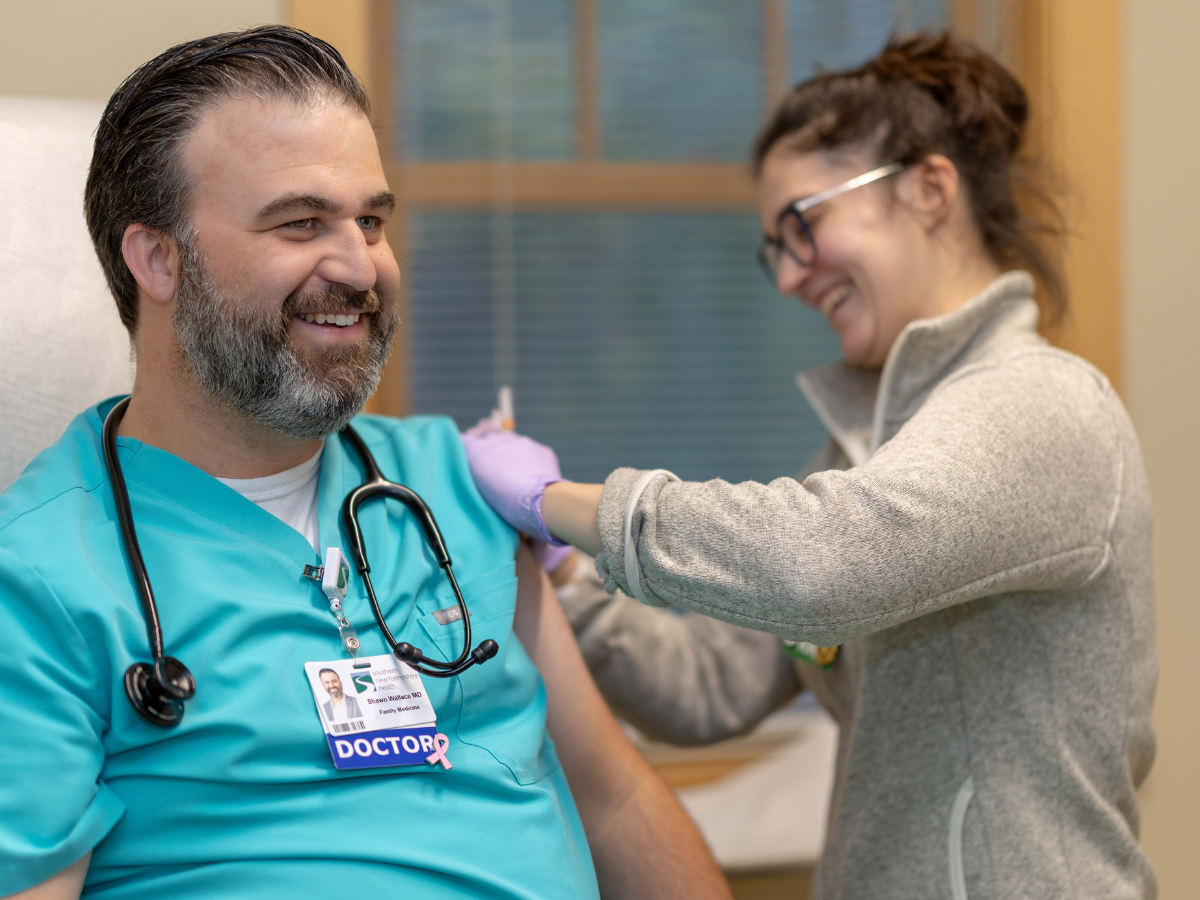
Measles can be a serious illness. The American Academy of Pediatrics reports that in 2025, “69% of the confirmed cases were among children and teens. Across all ages, 11% of patients were hospitalized, and three people died, including two children.”
The MMR vaccine (measles, mumps, and rubella) is our best defense. One dose is about 93% effective, and two doses are about 97% effective at preventing measles.
To prevent outbreaks, about 92–94% of a community needs to be immune. We call this herd immunity. The resistance of most people in a community to an illness or disease makes it harder for it to spread to unprotected members.
Be sure you are protected from measles
In order to be protected, we recommend:
- Children: Two doses of MMR on schedule.
- Adults: Confirm you’ve been vaccinated or had measles in the past.
- Travelers: Check your immunity before any international trip or travel to U.S. areas where cases are rising.
Measles and travel
I often meet people who assume measles isn’t a concern anymore. Unfortunately, that’s not the case. Outbreaks are happening both in the U.S. and around the world, and travelers who aren’t immune can pick up the virus and spread it without realizing it.
If you’re planning a trip, talk with your primary care provider. We can help check your records and make sure you and your family are protected before you go.
The bottom line
Measles is serious, fast-spreading, and preventable. Making sure you’re vaccinated is the simplest and most effective way to stay healthy and protect your community.
If you have questions about your measles immunity or vaccination status, Southern New Hampshire Health is here to help. Contact your primary care physician to review your records and discuss whether additional protection is recommended. If you do not currently have a primary care provider, HealthMatch can help connect you with the right one for you. Staying informed is an important step in protecting yourself and those around you.
 Salvatore Vella, Jr., DO, is Senior Vice President and Chief Medical Officer at Foundation Medical Partners of Southern NH Health and is a practicing internal medicine physician and hospitalist. In addition to his clinical and leadership roles, Dr. Vella contributes to medical education by teaching Geisel School of Medicine and University of New England medical students as they rotate through various specialties.