
 My Chart Patient Portal
 Language Services
 Medical Records
 News & Articles
 Charitable Giving
 Programs & Classes
May 14, 2026
Vaginal Hysterectomy: A Minimally Invasive Option with Faster Recovery
By Dr. Janine Keever, Amherst Obstetrics & Gynecology of Southern New Hampshire Health
When people hear the word “hysterectomy,” they often think of a major surgery with a long recovery. But that is not always the case.
For many patients, a vaginal hysterectomy can be the least invasive way to remove the uterus. Because the surgery is performed entirely through the vagina, there are no abdominal incisions, no visible scars, and often a smoother recovery compared with abdominal surgery.
At Southern New Hampshire Health, a nonprofit health system, we focus on providing safe, effective, individualized care. Vaginal hysterectomy remains an important option for many patients and is often considered the preferred approach when it is medically appropriate.
What is a vaginal hysterectomy?
A vaginal hysterectomy is a surgical procedure to remove the uterus through the vagina. Unlike laparoscopic, robotic, or open abdominal hysterectomy, this approach does not require incisions on the abdomen.
During the procedure, the surgeon works through the vaginal opening to carefully separate the uterus from its supporting tissue and blood supply. The uterus is then removed through the vagina. In some cases, the fallopian tubes and/or ovaries may also be removed through the same approach, depending on the patient’s anatomy, diagnosis, and surgical plan.
One of the biggest benefits for patients is that the surgery avoids abdominal incisions altogether. This can mean less pain, fewer visible signs of surgery, and a faster return to normal daily life for many people.
Why this approach to hysterectomy matters
There are several ways to perform a hysterectomy, including vaginal, laparoscopic, robotic, and open abdominal surgery. Each approach has a role, and the best choice depends on the patient’s anatomy, medical history, diagnosis, and goals.
When a patient is a good candidate, vaginal hysterectomy is often the least invasive option. It avoids abdominal entry, does not require robotic or laparoscopic ports, and allows the uterus to be removed through a natural opening.
Despite these advantages, vaginal hysterectomy is not offered as often as it could be. Many patients are never told that this approach may be an option for them. That is why it is important to ask your surgeon about all available surgical choices — including whether a vaginal hysterectomy is appropriate in your case.
Benefits of vaginal hysterectomy 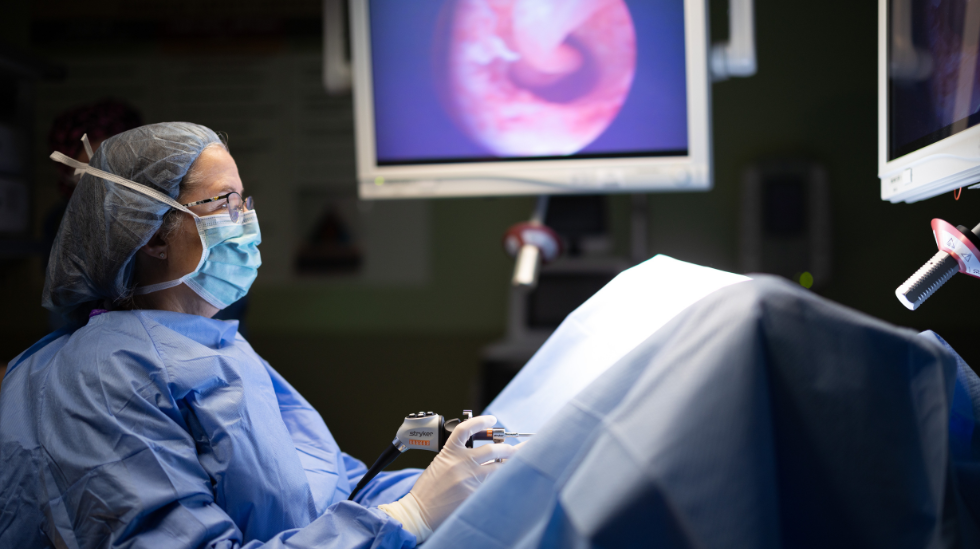
For the right patient, vaginal hysterectomy may offer several advantages, including:
- No abdominal incisions
- No visible scars
- Less postoperative pain for many patients
- Lower risk of some incision-related complications
- Shorter surgery and anesthesia time in many cases
- Same-day discharge for many patients
- Faster return to normal daily activities
- A less invasive overall surgical experience
Because there are no abdominal incisions, patients also avoid wound-healing issues that can sometimes occur with abdominal surgery. This can be especially meaningful for patients who are hoping for a quicker, more comfortable recovery.
Recovery after a vaginal hysterectomy
Recovery is one of the biggest advantages of this approach.
Many patients safely go home the same day. I always give patients the option to stay overnight if needed, but many prefer to recover in their own bed.
Most patients are walking the day of surgery and gradually return to light daily activities within a few days. Full recovery still takes time, and it is important to follow postoperative instructions carefully.
After surgery, patients typically need pelvic rest for about four to six weeks, which means nothing in the vagina during that healing period. This includes intercourse, tampons, and douching. Patients should also avoid heavy lifting, strenuous exercise, and activities that increase pressure or strain until they are cleared by their surgeon.
Even when someone feels better quickly, internal healing is still taking place. A smooth recovery depends on respecting those healing restrictions.
Understanding the risks of vaginal hysterectomy
Vaginal hysterectomy has been performed safely for decades and is a well-established surgical approach. In experienced hands, it can be a very safe and effective option.
As with any surgery, there are still risks. These may include bleeding, infection, injury to nearby organs such as the bladder, bowel, or ureters, anesthesia-related risks, blood clots, or the need to convert to another surgical approach if unexpected findings occur.
The most important step is having an honest conversation with your surgeon about your individual risk factors and whether this approach is right for you.
Helpful questions to ask include:
- How many vaginal hysterectomies do you perform?
- Am I a candidate for a vaginal hysterectomy?
- What are the benefits of this approach in my specific case?
- What risks should I be aware of?
- Are there any reasons I might need a laparoscopic, robotic, or open surgery instead?
- What should I expect during recovery?
These questions can help you feel more informed and confident in your care.
Is a vaginal hysterectomy right for you?
Not every patient is a candidate for vaginal hysterectomy. Factors such as uterine size, prior surgeries, pelvic anatomy, prolapse, endometriosis, scar tissue, ovarian concerns, and the reason for surgery all matter.
In my practice, I perform a detailed evaluation to determine which surgical approach is the safest and most appropriate. Some patients are excellent candidates for vaginal hysterectomy. Others may benefit from a laparoscopic, robotic, or open approach.
At Southern New Hampshire Health, we offer a full range of hysterectomy options, including:
- Vaginal hysterectomy
- Laparoscopic hysterectomy
- Robotic hysterectomy
- Open abdominal hysterectomy
The goal is to choose the right operation for the right patient.
A team approach to women’s health in Southern New Hampshire
One of the strengths of Southern New Hampshire Health is our collaborative approach to patient care. Our physicians, advanced practice providers, nurses, surgical technologists, anesthesia team, and operating room staff work closely together to provide safe, personalized care.
In the operating room, teamwork matters. We know each other’s strengths, communicate clearly, and support one another, especially in more complex situations. That collaboration helps us provide thoughtful surgical care for patients across Nashua, southern New Hampshire, and the surrounding region.
Final thoughts
A vaginal hysterectomy can offer a highly effective, minimally invasive option with no abdominal incisions, no visible scars, and a faster recovery for many patients.
If you are considering a hysterectomy, take time to ask questions and explore your options. The best surgical approach is the one that fits your body, your diagnosis, your safety, and your goals.
Scheduling a consultation
Dr. Janine Keever sees patients at Amherst Obstetrics & Gynecology in Amherst, New Hampshire, and works closely with each individual to determine the best approach for their care. She also sees patients seeking a second opinion on hysterectomy options.
Dr. Keever performs procedures at Southern New Hampshire Medical Center and at The Surgery Center of Greater Nashua, which offers an environment focused on patient safety, comfort, and privacy.

Janine Keever, MD, is a board-certified OB-GYN and gynecologic surgeon and assistant professor of obstetrics and gynecology at Dartmouth Geisel School of Medicine. She provides comprehensive women’s health care and gynecologic surgery, with extensive experience in minimally invasive and vaginal surgical techniques designed to promote faster recovery and reduce postoperative discomfort.
Dr. Keever’s clinical practice focuses on complex benign gynecologic conditions and advanced vaginal surgical techniques. She has particular expertise in surgical approaches that minimize recovery time while maintaining the highest standards of safety. She advocates for thoughtful surgical decision-making, selecting the approach that best fits a patient’s anatomy and condition rather than relying on a single technology or technique. For appropriately selected patients, vaginal hysterectomy remains one of the least invasive surgical options available.
Known for taking time to educate her patients, Dr. Keever works closely with individuals to help them feel informed and confident about their care decisions. Her compassionate, personalized approach has earned consistently high patient satisfaction.
She frequently provides second opinions on hysterectomy and complex gynecologic surgery, attracting patients from across New England seeking consultation on surgical options.
Call Amherst OB/GYN at 603-577-7971 to schedule an appointment or vistit Amherst Obstetrics & Gynecology for more info.