
 My Chart Patient Portal
 Language Services
 Medical Records
 News & Articles
 Charitable Giving
 Programs & Classes
August 24, 2026
Beyond Back-to-School Jitters: Recognize & Manage Anxiety
How to Recognize School Anxiety and Help Your Child Cope
By: Julie Doyle, LCMHC, Foundation Counselling and Wellness of Southern New Hampshire Health
As the new school year begins, it is normal for children and teens to feel both excited and nervous. They may worry about new teachers, classmates, schoolwork, routines, or social situations.
For many students, these feelings fade as they settle into the school year. For others, school anxiety may be stronger, last longer, and affect daily life.
Knowing the difference between normal first-day jitters and more serious anxiety can help families and schools offer support before it affects a child’s health, attendance, learning, or relationships.
Recognizing the Signs of School Anxiety
Children do not always say, “I feel anxious.” They may show their stress through physical symptoms, behavior changes, or attempts to avoid school.
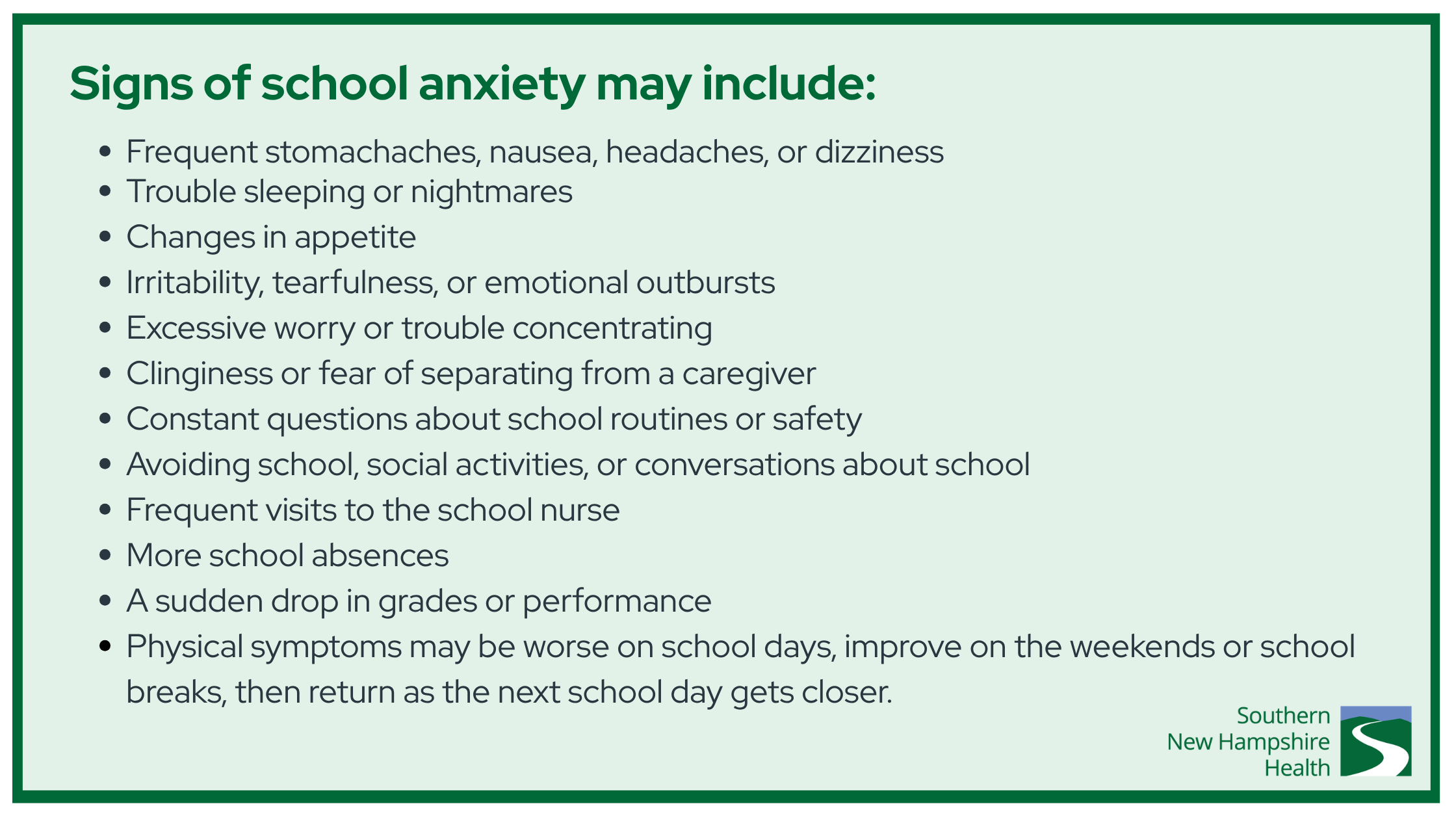
Physical symptoms may be worse on school days. They may improve on weekends or school breaks, then return as the next school day gets closer.
It is important to consider whether anxiety may be causing these symptoms. A medical provider can also help rule out a physical health problem when needed.
What Causes Back-to-School Anxiety?
Every child is different, but several situations may increase school anxiety.
- Major Transitions - Changing schools, moving to a new community, or entering middle or high school can feel overwhelming.
- Academic Pressure - Some children worry about grades, homework, tests, keeping up with classmates, or meeting expectations from teachers and parents.
- Social Challenges - Concerns about fitting in, making friends, peer pressure, or bullying can cause stress.
- Past Negative Experiences - A child who has faced bullying, learning struggles, or classroom problems may worry that the same things will happen again.
- Family Changes - Divorce, illness, money problems, the loss of a loved one, or the arrival of a new sibling can make returning to school feel harder.
When Is Anxiety More Than Typical School Nerves?
Some nervousness at the start of the school year is expected. School anxiety may be more serious when it:
- Lasts for several weeks
- Gets worse instead of better
- Seems much stronger than the situation calls for
- Interferes with school, home life, friendships, or activities
The key question is not only, “Is my child worried?” It is also, “How much is this worry affecting daily life?”
Understanding School Avoidance
One of the clearest signs of school anxiety is avoiding school.
School avoidance may include:
- Asking to stay home often
- Complaining of physical symptoms before school
- Visiting the school nurse many times
- Refusing to get dressed or leave the house
- Having trouble getting out of the car at drop-off
- Missing classes or full school days
Children may not understand that anxiety is causing their physical symptoms. Their pain and distress can feel very real.
Avoiding school may bring quick relief, but it can make anxiety stronger over time. The child learns that staying away is the easiest way to escape uncomfortable feelings. This can make returning to school even harder.
A calm and gradual plan can help a child return while building coping skills and addressing the cause of the anxiety.
School avoidance may be linked to anxiety, bullying, academic struggles, fear of failure, perfectionism, learning challenges, peer problems, or trouble separating from caregivers.
Understanding why a child is avoiding school is an important first step.
How Can Parents and Caregivers Help?
Parents and caregivers can help children manage school anxiety and feel more prepared.
Start Conversations Early
Do not wait until the first day of school. Ask what your child is looking forward to and what feels difficult. Specific questions may work better than asking, “Are you anxious?”
Try asking:
- “What part of the school day worries you most?”
- “Is there anything you wish would be different this year?”
- “Who could you go to if you needed help?”
Validate Their Feelings
Let your child know that their feelings make sense. You might say, “It makes sense to feel nervous about something new. We can make a plan to help you handle it.”
Try not to support long-term avoidance. Instead, show confidence that your child can take small steps forward.
Restart Routines
Begin returning to school-year routines before classes start. Focus on regular bedtimes, wake-up times, meals, morning routines, and preparing clothes and supplies in advance.
Knowing what to expect can help children feel more secure.
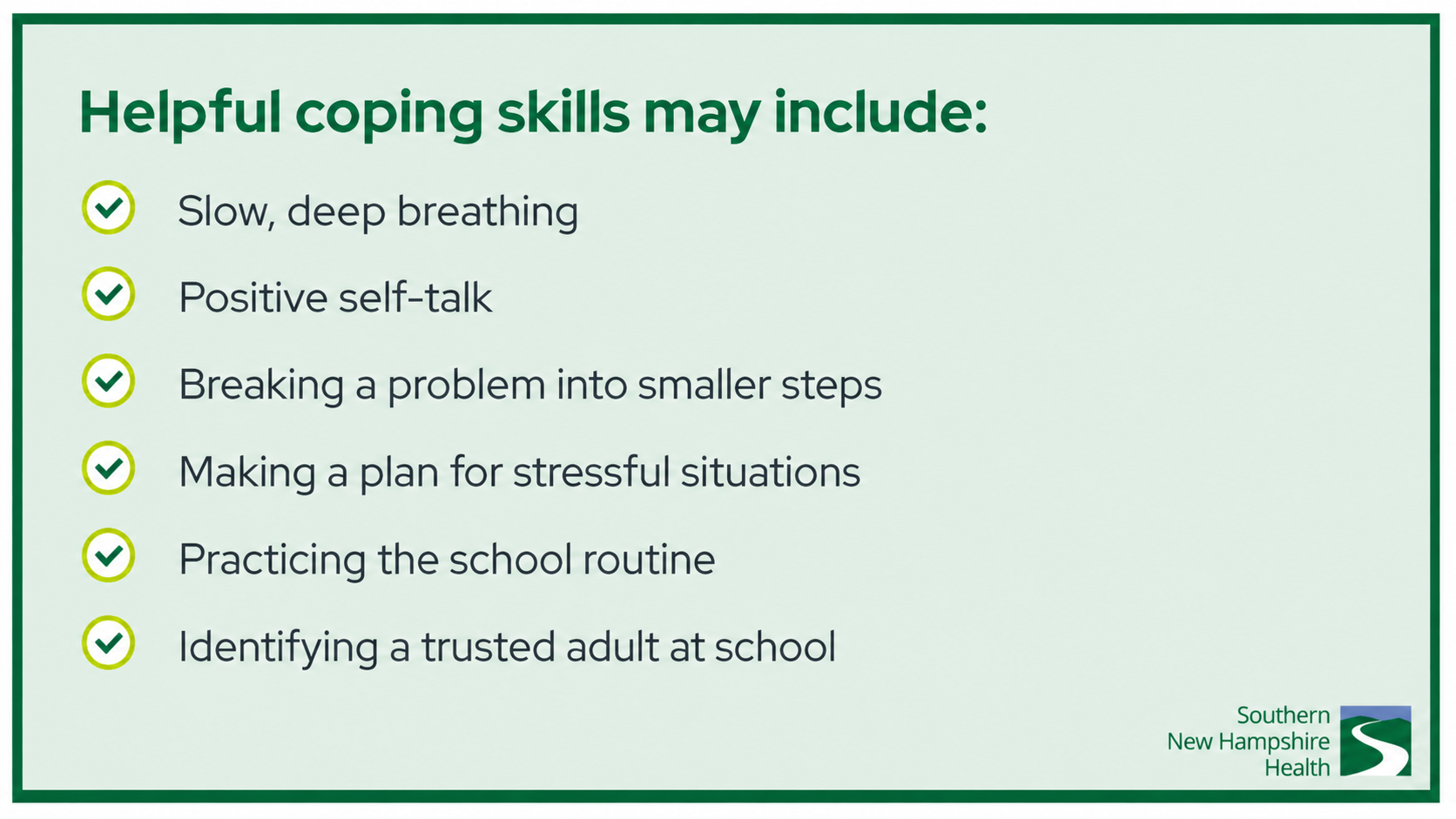
Practice Coping Skills
Constant reassurance may help for a few minutes, but children also need tools to manage worry.
Communicate With the School
Teachers, school counselors, nurses, psychologists, and other staff may notice patterns and offer support.
Families, schools, pediatricians, and mental health providers may need to work together when anxiety affects attendance, learning, or behavior.
When Should a Child Be Evaluated?
Consider speaking with a health care or mental health professional when school anxiety:
- Does not improve or continues to get worse
- Causes frequent physical symptoms
- Leads to repeated school absences
- Causes severe fear of separation
- Affects grades, friendships, or family life
- Keeps the child from taking part in normal activities
Getting help early may prevent school anxiety from becoming more serious.
Cognitive behavioral therapy, also known as CBT, is one treatment that may help children and teens. It teaches them how to recognize anxious thoughts, develop coping skills, and slowly face situations they have been avoiding.
Research supported by the National Institute of Mental Health shows that CBT can reduce anxiety symptoms and help children function better. Treatment should be based on the child’s age, symptoms, family needs, and specific concerns.
A Final Reminder About School Anxiety
Back-to-school anxiety should not always be dismissed as “just nerves.” At the same time, not every worried child has an anxiety disorder.
Look for patterns. Pay attention to how long symptoms last and how much they affect daily life. A stomachache, meltdown, request to stay home, or sudden change in attendance may be a child’s way of showing that they are struggling.
Recognizing school anxiety early can help children feel supported, build healthy coping skills, and return to the classroom with greater confidence.
 Julie Doyle, LCMHC, is a licensed mental health counsellor at Foundation Counselling and Wellness of Southern New Hampshire Health in Nashua, NH.
References
- American Academy of Pediatrics. (2019). Anxiety in teens is rising: What’s going on? HealthyChildren.org.
- American Academy of Pediatrics. (2024). Help your child manage anxiety: Tips for home & school. HealthyChildren.org.
- American Academy of Pediatrics. (2024). School avoidance: Tips for concerned parents. HealthyChildren.org.
- Child Mind Institute. (2026). Back-to-school anxiety.
- National Institute of Mental Health. (2024). Cognitive behavioral therapy alters brain activity in children with anxiety.