
 My Chart Patient Portal
 Language Services
 Medical Records
 News & Articles
 Charitable Giving
 Programs & Classes
July 7, 2026
Summer Heat Can Turn Serious Fast: Know When to Get Help
Heat Stroke or Heat Exhaustion- Know the difference and what to do
By Dr. Dilip Yarabothu, Immediate Care
Hot summer days can be fun, but they can also be risky for your health. Too much heat can make you sick faster than you may think.
Hot temperatures can impact your health at the beach, on a sports field, at work, in the yard, or inside your home. Everyone is at risk, even if you are a healthy individual.
Heat illness is much easier to prevent than to treat. As an emergency physician at Southern New Hampshire Health Immediate Care, I encourage people to recognize the early signs and cool down before it becomes an emergency.
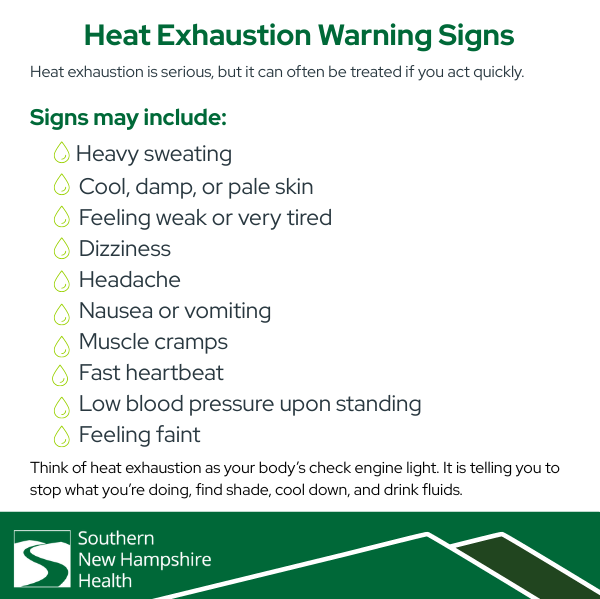
A headache, dizziness, nausea, heavy sweating, or feeling weak are early signs that the body is in trouble.
Why heat can make you sick
When you get too hot, your body sweats. Sweat helps you cool down.
But on very hot or humid days, sweating may not be enough. You can lose too much water and salt. Your body may have trouble cooling itself. That is when heat illness starts.
There are two main types of heat illness to know:
- Heat exhaustion means the body is getting too hot and needs help.
- Heat stroke means the body can no longer control its temperature. This is a life-threatening emergency.
Heat exhaustion warning signs
What to do if you suspect heat exhaustion
If you think someone has heat exhaustion:
- Move to a cool place out of the sun.
- Rest.
- Loosen tight clothing.
- Use cool, wet cloths.
- Sip water or a sports drink.
- Stop sports, yard work, or outdoor work for the day.
Do not try to “push through.” That can make things worse.
When to go to Immediate Care
Go to Immediate Care if symptoms do not improve after cooling down and drinking fluids.
You should also seek care if the person:
- Keeps vomiting
- Feels very weak
- Feels faint
- Has a bad headache
- Has signs of dehydration
- Has symptoms that come back
- Is very young, older, pregnant, or has a health condition
Southern New Hampshire Health Immediate Care offers walk-in and virtual urgent care, and can treat many heat-related symptoms, such as dehydration, dizziness, nausea, headache, and muscle cramps.
Check wait times and schedule your arrival at Immediate Care
Heat Stroke: Call 911
Heat stroke is more serious than heat exhaustion and is not something to treat at home or wait out.
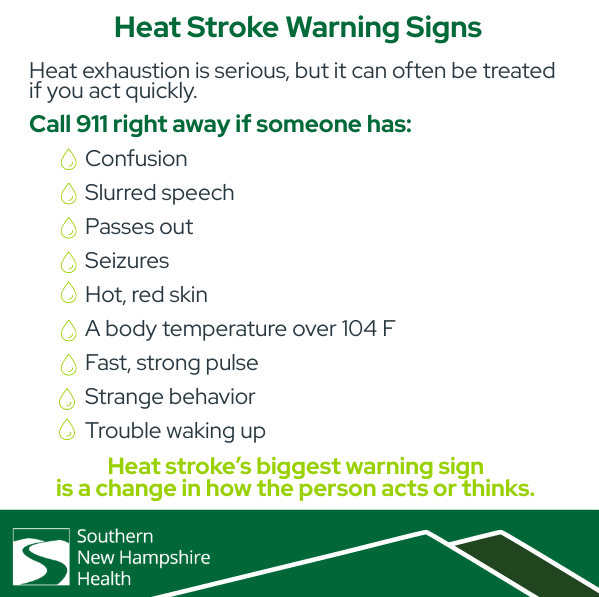
A person with heat stroke may stop sweating. However, that symptom does not always happen.
If they seem confused, unsafe, or not like themselves, call 911.
What to do while help is coming
After you call 911:
- Move the person to shade or air conditioning.
- Remove extra clothing.
- Put cool, wet cloths on their skin.
- Direct a fan to blow on the overheated person.
- Place ice packs near the neck, armpits, or groin.
- Do not give drinks to the person if they are confused, sleepy, having a seizure, or unconscious.
The goal is to cool the person’s core body temperature down while emergency help is on the way.
Who is at higher risk for heat stroke?
Heat can be dangerous for anyone. However, some people are at higher risk.
The people at highest risk include:
- Babies and young children
- Older adults
- People who work outside
- Athletes
- People without air conditioning
- People with heart disease, diabetes, or other health issues
- People taking certain medicines (ask your healthcare provider)
- People who are sick, dehydrated, or drinking alcohol
Check on family, friends, and neighbors during very hot days.
Simple ways to stay safe in the heat
A few steps can help prevent heat illness:
- Drink water often.
- Take breaks throughout the day
- Stay in the shade when you can.
- Use air conditioning or cooling centers.
- Wear light, loose clothing.
- Avoid hard activity during the hottest part of the day.
- Never leave a child, older adult, or pet in a parked car.
Heat illness can move from mild to dangerous quickly. Listen to your body. Keep an eye out for those early symptoms.
If you have dizziness, nausea, headache, weakness, or muscle cramps from the heat, Immediate Care can help with walk-in or virtual care options.
If someone is confused, passes out, has a seizure, or is not acting like themselves, call 911.
Fast action can prevent serious harm and may save a life.
Watch me speak on WMUR-TV about staying safe in the heat
 Dr. Dilip Yarabothu is a board-certified emergency physician with over a decade of experience in the medical field. After serving full-time in the emergency department at Southern NH Medical Center, he is now providing care to patients of our Immediate Care locations in the southern NH area. He recognizes the importance of providing healthcare that fits into patients' busy lives and has joined the growing Virtual Care team to better serve our community.