
 My Chart Patient Portal
 Language Services
 Medical Records
 News & Articles
 Charitable Giving
 Programs & Classes
June 4, 2026
New Colon Cancer Screening Guidelines: What Adults Over 45 Should Know
A New American Cancer Society Colorectal Cancer Screening Option
By Michael Kaczanowski, MD, AGAF, Foundation Gastroenterology
 The American Cancer Society has updated its colorectal cancer screening guidelines to include blood-based screening tests as an option for some adults. While this has generated attention, the most important message has not changed: if you are 45 or older, you should be screened for colorectal cancer.
As part of Southern New Hampshire Health, a not-for-profit health system with a mission to improve the health of our community, Foundation Gastroenterology welcomes any advances that help more people participate in screening. Too many adults remain unscreened, and colorectal cancer remains one of the leading causes of cancer-related deaths in the United States.
We understand that many people put testing off because they are busy or nervous about the results and preparation process. The new guidelines provide additional options, but patients need to understand that not all screening tests are designed to accomplish the same goal.
What changed in the new colon cancer screening guidelines?
The American Cancer Society still recommends that adults at average risk start colorectal cancer screening at age 45. Screening should continue through age 75 for people in good health.
The biggest update is that blood-based tests are now listed as another screening option for average-risk adults aged 45 and older.
The most important thing patients should understand about colonoscopy
Although both are considered screening tests, colonoscopy and blood-based screening tests serve very different purposes.
- Blood tests are designed primarily to detect signs that colorectal cancer may already be present.
- Colonoscopy is designed to detect and remove precancerous polyps before they become cancerous.
That distinction is critically important.
A blood test may help identify a cancer that has already developed. A colonoscopy can often prevent cancer from developing in the first place.
Why colonoscopy is still the preferred screening test 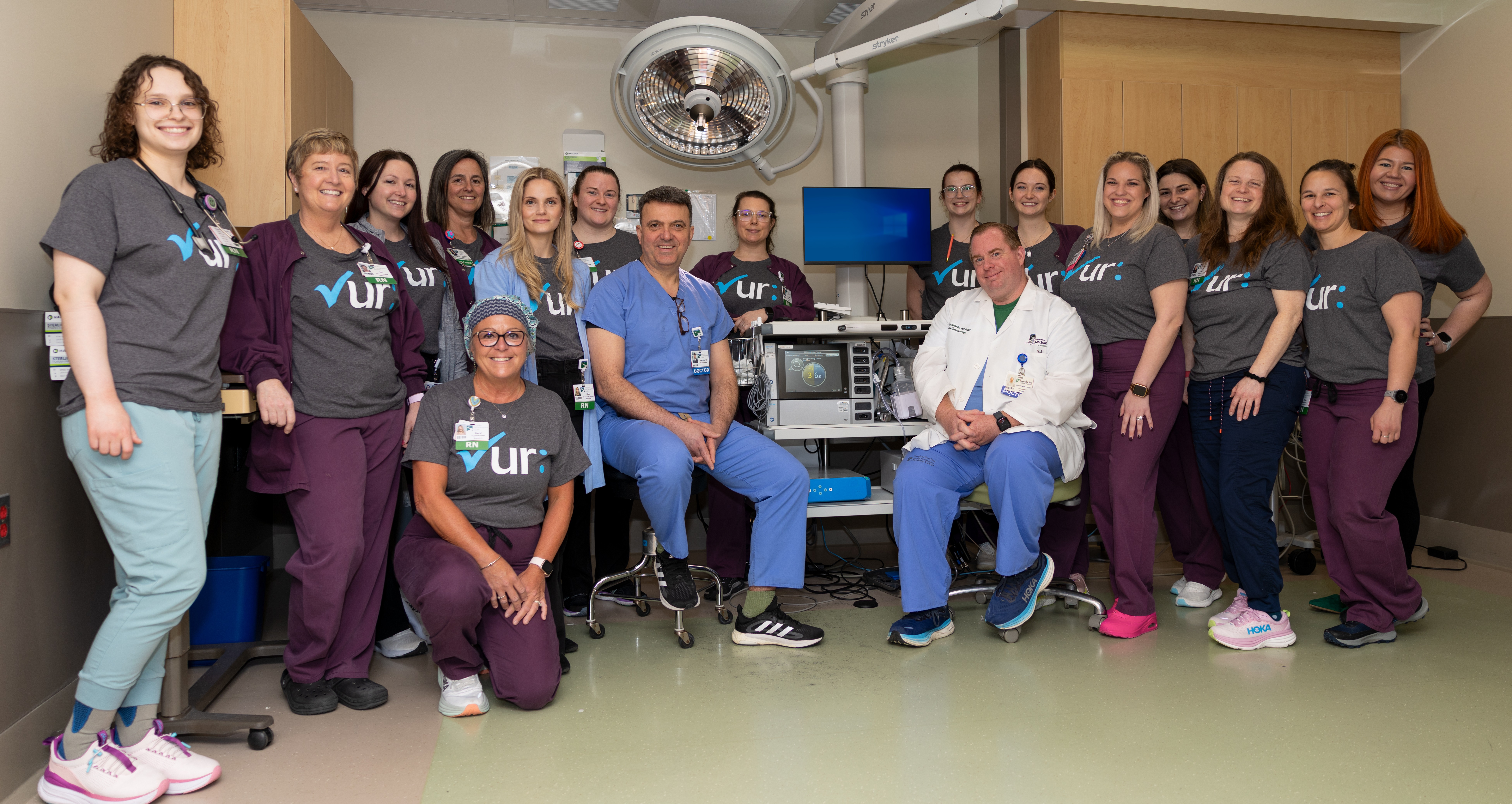
Colonoscopy allows physicians to directly examine the lining of the colon and remove suspicious polyps during the same procedure. Neither blood tests nor stool-based tests can remove polyps. They can only identify patients who may need further testing.
In addition, blood-based screening tests are less effective at detecting advanced precancerous polyps. Any positive blood-based screening test must also be followed by a diagnostic colonoscopy.
At Foundation Gastroenterology, we offer enhanced colonoscopies using the GI Genius™ intelligent endoscopy module. This technology uses advanced imaging and artificial intelligence software to help physicians detect potentially precancerous polyps during a colonoscopy. Early detection is one of the best ways to prevent colorectal cancer, but small polyps can be hard to see with the naked eye. GI Genius™ gives us another tool to help identify possible signs of cancer as early as possible.
When is a blood test appropriate?
For patients who are unwilling or unable to undergo a colonoscopy, blood-based screening may be a reasonable alternative.
A blood test is certainly preferable to avoiding screening altogether. However, patients should understand that these tests are considered second-line options because they are less effective at identifying precancerous lesions. Their greatest strength is detecting existing cancer rather than preventing cancer from developing.
Why colon cancer screening matters more than ever
Colorectal cancer is increasingly being diagnosed in younger adults, which is one reason screening recommendations were lowered from age 50 to age 45.
The National Cancer Institute reports that nearly 4% of men and women will be diagnosed with colorectal cancer at some point in their lives. When colorectal cancer is found early and still localized, the five-year relative survival rate is more than 90%. But outcomes are much worse when cancer is found later.
What this means for colon cancer screening in NH
For adults in southern New Hampshire, the new colon cancer screening guidelines offer more choices, but the message is the same: get screened.
If you are 45 or older, talk with your healthcare provider about colorectal cancer screening.
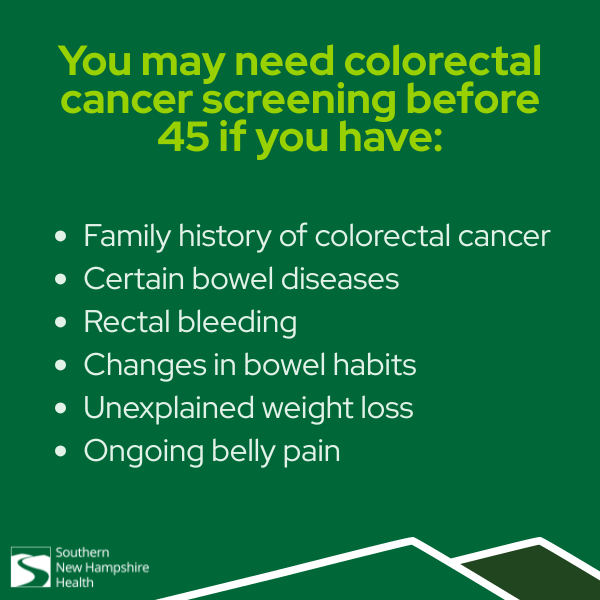
The best screening test is the one you complete, but not all screening tests provide the same benefit. For most patients, colonoscopy remains the preferred option because it can both detect cancer and help prevent it from developing in the first place.
Your next step
Talk to your primary care provider and schedule your colonoscopy. At Foundation Gastroenterology, we are passionate about preventive care, helping stop conditions before they develop or progress. To schedule an appointment, call 603-577-5355.
 Michael Kaczanowski, MD, AGAF, is board-certified in internal medicine and gastroenterology and has been named Fellow of the American Gastroenterological Association (AGA). He received his medical degree from St. George’s University School of Medicine, Grenada, and completed his residency at Norwalk Hospital, Yale University teaching affiliate, Norwalk, CT. Dr. Kaczanowski has published on the use of wireless capsule endoscopy for the diagnosis of small bowel neoplasms, and his area of special interest is in the detection of colon cancer, esophageal disease, and swallowing disorders. In addition to his practice, Dr. Kaczanowski serves on several committees and as the chair of medicine at Southern New Hampshire Medical Center.